
From Voice to Clay, From Clay to Code
From the Forth Coming Collection of Essays of the Same Title

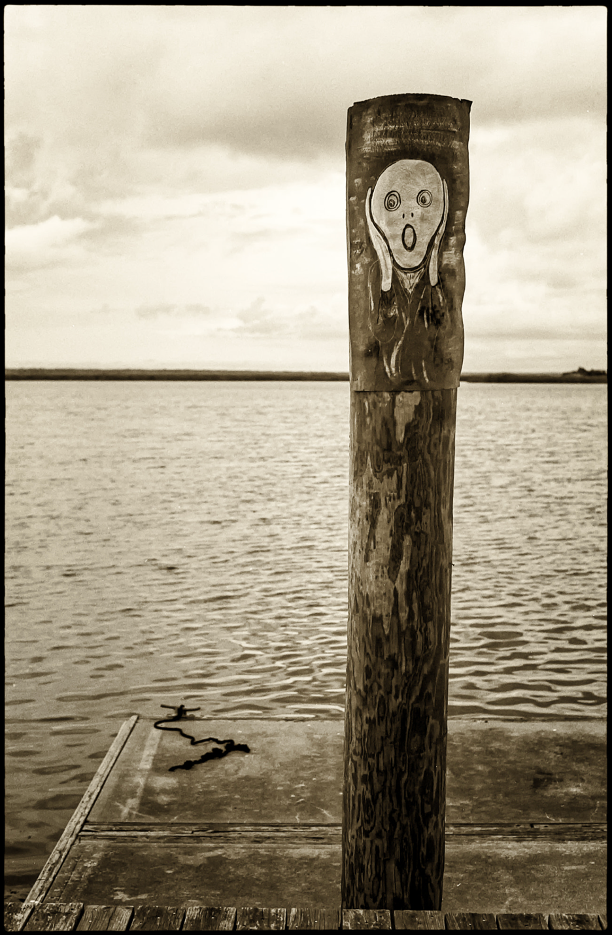
Photo by Tedd J Weitzman
Long before stone was shaped into blades or wheels crafted for carts, humans fashioned utterances into words. Language is the primary and arguably the most important human technological invention; it is the primal tool by which thought becomes external, shared, and preserved. Language is the machinery of expression. Every spoken word is both symbol and instrument. Language has an extended feature whereby it structures what can even be thought in the first place. In essence, language expands imagination, makes memory collective, and allows communities to hold truths in common.
In comparison, biology can be considered one of nature’s most important technological inventions. Just as language gives shape to thought, biology gives shape to being. The double helix of DNA is itself a script, a code that preserves and transmits life across generations. Proteins, enzymes, and cellular systems are the interpreters of that code. This biological apparatus literally reads, copies, and edits living things into existence while relentlessly consuming energy.
Nature is a seemingly infinite expressive system that arranges elements and chemical compounds with varying complexity and purposes suited to environmental conditions. Nature stamps in flesh and bone what words record in sound and symbol. In this sense, the genetic code is the first human alphabet; life itself is a living text. And human language, when it finally emerges, is an echo of that deeper syntax. Stated romantically, language is yet another expression of an infinitely complex universe. It does this through our breath and our words, just as it does through the coiling and uncoiling of our DNA or through the cosmic dances of galaxies.
If one believes language and writing are sacred, the above is probably the main root of why. To utter sound into symbol is to take what is fleeting and mortal and give it continuity and expression beyond the body. In the same way that DNA transmits life across generations, language and writing transmit meaning across centuries. Writing turns language into artifact. It freezes vibration into mark, carries the soul of expression into a kind of permanence. That is why cultures treat it with reverence, why alphabets are often bound to myth and divinity, and why the first scribes were priests. To speak, to write is to join in the cosmic authorship, to participate in creation not just through biological being but through conscious preservation.
Human language likely emerged 100–200,000 years ago. It took millennia for people to invent writing after they learned to speak. Writing transformed the innovation of language into a modality of perpetuity. Speech is fleeting, vanishing the moment after utterance. Writing anchors language in stone, clay, papyrus, parchment; it is the technology of linguistic durability, the systematization of memory. By storing words, writing reshaped how we think: it allowed abstraction, codification of law, the creation of history, philosophy, theology. Writing is both the container for language and the meta-tool that preserves language itself. And both innovations have continued to transform each other over time.
First, stone engravers and clay tablet impressionists gave weight to language. In Mesopotamia around 3000 BCE, for the first time words outlasted breath. They were etched into rock, impressed into wet clay. Words literally hardened into remembrance. From that moment forward, bureaucracies and kingdoms carved their decrees into stone declaring legitimacy and power. To inscribe in rock was to demand eternity and obedience. Clay tablets, meanwhile, carried the administrative machinery of ancient Mesopotamia: grain ledgers, contracts, laws. These were practical documents that comprised the first archives. The writing was heavy, material, nearly sacred; it demanded enormous effort to preserve even a single sentence.
Papyrus and parchment revolutionized writing in Egypt around 2500 BCE. Once invented, it quickly spread through the Mediterranean world and created a writing-based economy that persists today. These lighter, portable surfaces freed language from clunky mediums. They made longer form writing possible: narrative, philosophy, theology. Scrolls could also be copied, carried, and collected. This marked the first large-scale distribution of written expression. Scrolls could be manufactured and distributed in quantity, moved along trade routes, and more deliberately preserved in archives. Texts were also created with an awareness that they would circulate and have value beyond their community or culture of origin.
The act of writing shifted from chiseling durableness to weaving a fabric of ideas that traversed the globe. If scrolls gave language mobility, libraries gave that mobility purpose. Libraries arose, among them the famous institutes in Alexandria and Pergamum. These were not only storehouses but cultural engines: centers of translation, scholarship, and synthesis. They gathered texts from across empires and civilizations, preserved myths and laws, and placed works from diverse traditions side by side. Libraries became the repositories of collective memory and the crucibles of literary exchange. Within their walls, knowledge crossed semantic and geographic boundaries, allowing ideas to be compared, debated, and transformed. They symbolized an ambition to collect the world’s wisdom; their destructions were mourned as civilizational wounds.
Quills and ink, appearing in late antiquity and flourishing in the medieval period (circa 6th–15th centuries CE), marked a significant shift in the economy of writing. Earlier cultures used reed pens on papyrus with inks made from soot, gum, and water. But in medieval Europe, the adoption of feather quills together with the invention of parchment and vellum allowed for finer, more durable strokes and greater detail.
Alongside these tools, inks themselves evolved. Medieval ink recipes, often based on oak galls and iron salts, produced darker, longer-lived results than earlier carbon-based predecessors. The spread of these superior inks across Europe supported the durability of manuscripts, allowing for wider distribution. The pairing of quill, velum, and resilient inks became the foundation of medieval textual customs and supported the rise of calligraphy and illumination.
Most of the writing during this period, however, was not original composition but the careful copying of existing texts. Quills and ink became the instruments for both an art form and sacred rituals. Scribes filled monastic scriptoria, meticulously reproducing scriptures, philosophical treatises, and classical works for preservation and dissemination. This labor sustained knowledge’s continuity across centuries, guaranteeing ideas would travel far beyond their points of origin.
Simultaneously, writing became a contemplative act. Each mark was measured, each page an artifact worthy of deep contemplation. The scribe’s work carried reverence, sanctity in inscription. Calligraphy, illuminated manuscripts, and the artistry of letters all emerged from this observance to and demand for detail. Writing was as much an act of devotion as it was an achievement in communication. Spiritual and intellectual life were bound together through the careful strokes of quills.
From the manuscript economy arose the requirement for greater scale and consistency. Texts were precious, laboriously copied, but also vulnerable to error and loss. The printing press answered this demand and transformed the distribution of writing. Gutenberg’s invention in the mid-15th century CE introduced a mechanical press that could produce hundreds of identical pages in the time it once took to copy one. The press multiplied expression. What had been recorded in still fragile and tomb-like manuscripts suddenly became replicable at scale.
Gutenberg did not merely produce books; he enabled an abundance of written words. Authority shifted, texts were no longer monopolized by clerical scriptoria. Knowledge could now spread beyond elites, literacy could expand, and voices could multiply in mass. The cultural impact was immense: vernacular Bibles circulated, the Reformation ignited, pamphlets and polemics reshaped public life. The printing press did not just increase quantity; it redefined who could speak, who could read, and who could be heard.
In the 16th century CE, following the discovery of graphite in England, pencils materialized. With them came erasability, sketching, and the freedom to draft provisionally. Ideas could be tested, reshaped, erased. Writing was no longer only about permanence but also about process. The pencil democratized drafting, turning thought itself into something flexible and experimental. They were embraced by artists, engineers, and thinkers of the Renaissance.
Fountain pens marked another revolution in the 19th century CE. They combined fluid elegance with efficiency: ink simply flowed and with it the labor associated with writing diminished. Pens enabled speedy lettering while retaining its beauty. They became the instruments of both artists and bureaucrats, signaling the shift into modernity. In its long journey, writing was no longer sacred or provisional; it became professional, the daily and common tool of correspondence, commerce, and administration.
Then during the Industrial Revolution, ballpoint pens democratized writing entirely. Cheap, portable, durable, they spread in a quiet revolution of their own. With the backdrop of industrial production, world wars, education in mass, and new energy sources, ballpoint pens turned everyone into a writer. From shopping lists, notes, journals, ledgers to manuscripts, language could be set down anywhere, by anyone, instantly. Writing had truly left the scriptorium and the desk and slipped into pockets and purses. Writing traveled with the body. If stone was permanence and parchment portability, the ballpoint was ubiquity.
And then the real writer’s revolution took root in the form of typewriters. First mass-produced in the late 19th century but rising to dominance in the early 20th century, they truly industrialized writing. With them came uniformity, speed, and the soundscape of modern offices: the steady clack of administration. Letters became standardized, text reproducible in carbon copies, communication accelerated. Typewriters married writing to the rhythms of industry, to the hum of work in the mechanized age.
Relatively quick on the typewriter’s heels, the invention of the word processors dissolved the page into something endlessly editable. Text was no longer fixed in the moment of inscription. It became fluid, almost fragmentary. At the very least, it was commoditized. Writers could experiment, delete, rearrange, and endlessly refine with comparative ease.
With the computer and digital networks of the late 20th and early 21st centuries, writing inevitably detached from paper altogether. Words became data: code, packets, signals. Expression could travel at light speed across vast distances, be instantly duplicated, shared, and altered. What began as breath had become inscription, then mass produced, and is now pure transmission. The act of writing is no longer tied to a surface at all; it is the flow of information itself.
If the printing press represents replication and proliferation, the Internet is hyper-propagation. Hypothetically, if not already in practice, every artifact of human expression can be shared instantly. From a technological perspective, all barriers to entry are shattered: anyone with a device can publish, distribute, or consume. The archive is no longer bound or finite; it is limitless. But with this abundance comes relentlessness. Infinite scroll replaces contemplation, algorithms replace librarians, feeds clamor louder than any particular interpretation of text. The old anxiety of their being too many books becomes the lived condition of too much of everything, all at once.
And now, Artificial Intelligence is upon us. This is the truly remarkable advent of the talking machine. It is a tool unlike any before. Writing recorded language; the printing press replicated it in mass; the Internet hyper-proliferated it. But AI, it reshapes it entirely. For the first time, the technology itself “speaks back.” AI is language in, language out. It absorbs, recombines, and re-articulates. It is not a passive recorder nor merely a distributor. It is an active participant in the cycle of expression. With it, we stand in a liminal space: symbolic expression, language itself has met its mirror.
I am living in this space as a willing participant. Over the past year, I have written more than in any other period in my life. I would have done so without AI, but I have chosen to write with the modern aid the past six or so months. What astonishes me is not simply the speed, the collapse of weeks of drafting into hours, but the way the tools expand my imagination and mirror thought back with clarity. Where the typewriter gave uniformity, where the word processor gave endless editability, AI gives extension to the act of writing itself. A warning though: creating an AI environment that is truly additive to my process has been a herculean effort.
In practice, creating an appropriate, fit-for-purpose bot has meant long periods of trial and error. Days spent shaping prompts, testing approaches, discarding experiments, and ongoing refinements. I learned to train my tools, to teach them to respond in ways that honored the texture of my voice and the complexity of my ideas. At first the results were awkward, mechanical, and ultimately unhelpful. But, even early on there were enough glimmers of hope to persist.
I discovered rhythms of interaction that were genuinely creative. I learned how to ask the right questions, develop the right references. I learned how to pace exchanges, to balance trust in the tool with my own discernment. Slowly, the machine ceased to feel like a blunt instrument and became more like a companion in my writing-craft. It is now something I write through as opposed to with. That transformation required patience and discipline; but once achieved, it has unlocked a space and pace of writing I had thought impossible to attain.
My AI optimism springs from direct experience. The tools are revolutionary, yes, but also familiar. For the writer, they are another step in the same lineage of quills, presses, and processors. Each tool altered how humans could express themselves. In many ways, AI is no different. At its best it magnifies and accelerates the writing process. It collapses research, drafting, and refinement into simple gestures, amplifying creative rhythms rather than interrupting them.
I validate the anxiety many share regarding the future of AI and its integration with humanity in general. But for me, writing with AI is not surrendering authorship. I would never allow that. It is sharpening it. The voice remains mine, the structure mine, the vision mine. I view AI as the quill and parchment, the ballpoint pen or typewriter of this age. It extends my reach, accelerates my rhythm and production. AI also has the extraordinary ability to keep me company as I move through the exhausting and ultimately isolating, however joyous, labor of creation.
I cannot help but be optimistic. I know what is possible. I know what I have produced. And so, I take my place in this long history of expression. I am one more writer with a new tool, carrying the lineage and innovation forward through its next chapter.